Customer Context Collapse: Unseen Drivers of Revenue Loss
Uncover hidden drivers of revenue loss due to fragmented customer data. Learn the significance of verified data to enhance your sales strategy.
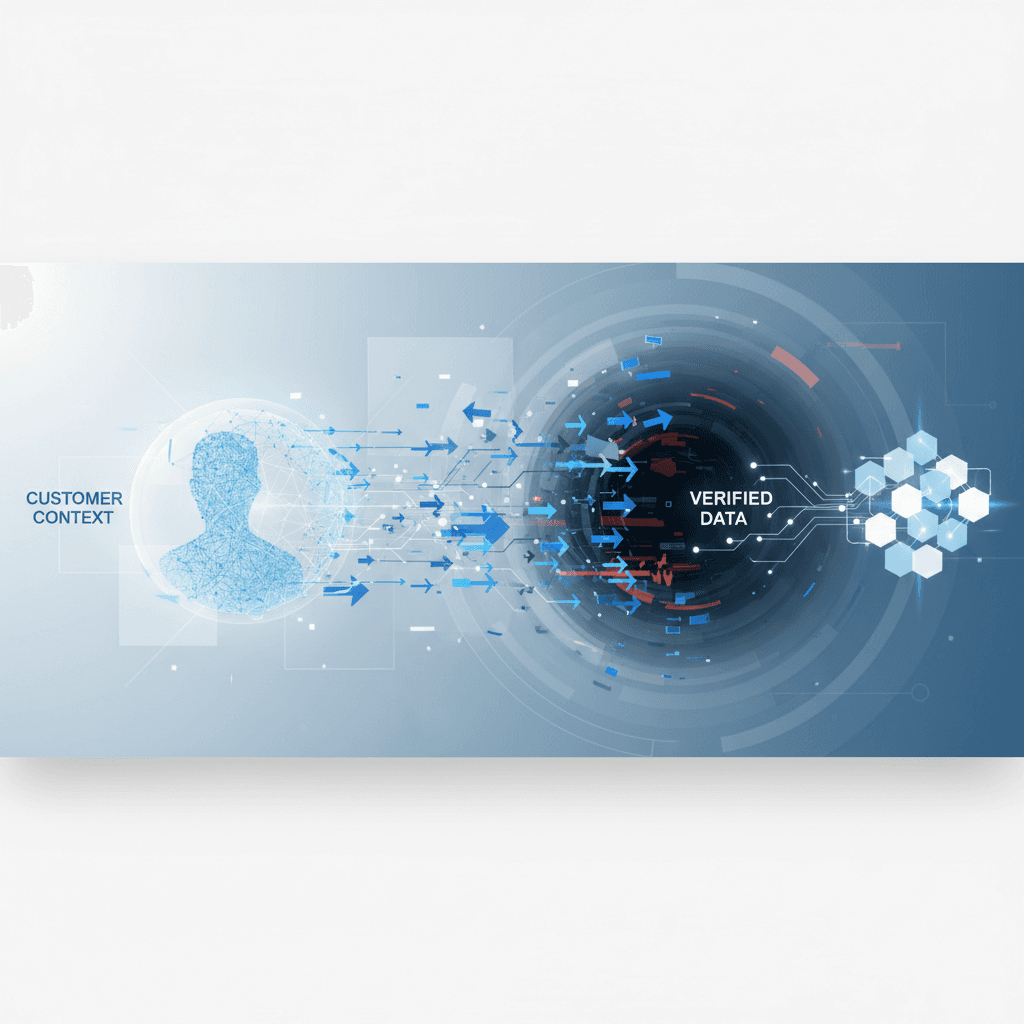
When Customer Context Collapses: The Silent Revenue Killer in B2B Sales
In the high-velocity world of B2B sales, every interaction counts. Yet, despite sophisticated CRM systems and extensive sales enablement tools, many sales teams are unknowingly leaving money on the table. The culprit? Customer context collapse — a phenomenon where fragmented, inconsistent, or unverified customer data blinds sales teams to the full picture, leading to missed opportunities, misaligned strategies, and ultimately, revenue leakage.
This invisible problem is far more costly than most leaders realize. According to industry studies, poor data management can drain up to 20% of annual revenue from B2B enterprises. It’s not just about lost deals; it’s about eroded trust, inefficient operations, and a compounding drag on growth.
In our previous discussion, we explored the discount spiral in enterprise sales — a visible, measurable driver of margin erosion. But customer context collapse operates in the shadows. It’s silent, systemic, and insidious, affecting every stage of the sales cycle from lead generation to post-sale account management.
This blog dives deep into the anatomy of customer context collapse, its impact on revenue, and how organizations can harness verified data and AI-driven intelligence to turn fragmented information into a strategic advantage.
Understanding Customer Context Collapse
Customer context collapse occurs when sales teams cannot see the full spectrum of a customer’s interactions, history, and preferences. Imagine a key account with multiple subsidiaries, operating in different regions, each interacting with different reps and platforms. Without a unified, verified view of all these touchpoints, sales reps often operate in silos, unknowingly duplicating efforts or targeting the wrong stakeholders.
The problem intensifies when CRM data is incomplete, outdated, or inconsistent. Multiple profiles may exist for the same account, with contradictory contact information, historical interactions, and purchase patterns. Sales teams, armed with partial insights, end up making suboptimal decisions: sending irrelevant proposals, over-communicating to some contacts, or under-serving others. The result? Deals stall, cycles lengthen, and competitors swoop in.
As one sales leader recently shared:
"We were losing major deals simply because our reps didn’t know who owned the decisions at the client side — our CRM gave conflicting answers."
This scenario is not uncommon. For complex B2B accounts, a lack of verified and integrated customer data is more than inconvenient; it’s a strategic liability.
The Strategic Impact on Sales
When context is fragmented, sales strategies quickly go off track. Consider these cascading consequences:
Misaligned Targeting: Without a clear understanding of stakeholders, sales reps waste effort on low-impact contacts, missing decision-makers who could drive revenue.
Inefficient Resource Allocation: Teams focus on accounts that appear promising on paper but are already saturated or low-potential, while high-value prospects languish unnoticed.
Discount Overuse: Unclear account histories can lead to unnecessary concessions to close deals — a hidden margin killer.
Extended Sales Cycles: The time spent reconciling inconsistent data and clarifying account details slows deal velocity, reducing quarterly pipeline efficiency.
Verified customer context, in contrast, empowers precision engagement. Sales reps can align solutions to customer needs, tailor messaging, and proactively manage relationships across complex organizational hierarchies.
Revenue Implications
The financial toll of context collapse is staggering. In a landscape of shrinking margins and heightened competition, inefficiency is costly:
Missed Opportunities: Inconsistent account data can cause reps to overlook cross-selling and upselling opportunities across business units.
Customer Churn: Clients notice when sales interactions are irrelevant or repetitive, eroding trust.
Operational Waste: Time spent manually cleaning data or coordinating between silos could instead fuel strategic initiatives.
A McKinsey report highlights that companies with poor data quality risk losing up to 20% of revenue annually — a figure that dwarfs traditional concerns like discounting or marketing inefficiency.
This is where verified, unified data transforms from a hygiene factor into a revenue catalyst.
Key Strategies to Prevent Customer Context Collapse
The solution lies not in more CRM features, but in verified, enriched, and unified customer intelligence. Organizations must adopt a multi-pronged approach that combines technology, process, and culture:
1. Data Verification
The first step is to ensure that all customer data is accurate, complete, and reliable. Tools like EntityLock™ by SalesDots validate customer data against authoritative registries, harmonizing multiple accounts into a single source of truth. Confidence scores indicate data reliability, enabling sales teams to trust their insights when making critical decisions.
Verification is not a one-time task. Continuous validation ensures that the account view evolves alongside the customer, capturing new subsidiaries, mergers, or contact changes in real time.
2. Enhanced Customer Engagement
Verified data is a gateway to meaningful engagement. When sales reps understand customer hierarchies, preferences, and historical interactions, they can:
Craft personalized proposals that resonate with stakeholder priorities.
Time communications strategically to align with decision-making cycles.
Identify cross-selling and upselling opportunities previously hidden in fragmented data.
The outcome is higher win rates, shorter sales cycles, and deeper account penetration.
3. AI-Driven Insights
Beyond verification, AI augments the value of customer data. Platforms like SAP Joule and SalesDots intelligence suites analyze complex data relationships, flagging opportunities, forecasting churn risk, and suggesting next-best actions. For example:
An AI agent might detect that a subsidiary has recently expanded operations, recommending a tailored upsell.
Predictive analytics can highlight accounts at risk of churn, enabling proactive engagement before revenue is lost.
By combining verified data with AI, sales teams move from reactive decision-making to proactive opportunity management.
Implementing a Robust Verification Regime
To translate strategy into action, organizations need a structured roadmap:
Audit Current Data Practices: Evaluate the completeness and accuracy of customer data across CRM, ERP, and third-party sources. Identify inconsistencies and gaps.
Deploy Verification Technologies: Implement solutions like EntityLock™ to unify accounts and validate information continuously.
Train Your Team: Ensure sales, analytics, and BI teams understand the importance of verified data and how to leverage it effectively.
Monitor and Iterate: Regularly assess data quality, adapt verification protocols, and refine engagement strategies to stay aligned with business goals.
Best Practices & Pro Tips
Cross-Reference Data Sources: Combine internal CRM data with external registries, news feeds, and financial filings to maintain a holistic account view.
Prioritize Strategic Segments: Focus verification and engagement efforts on high-value accounts and emerging opportunities.
Cultivate a Data-Driven Culture: Encourage every team to treat verified data as a shared asset, reducing silos and improving operational coordination.
Leverage Territory Intelligence: Tools like SalesDots’ Territory Intelligence help align accounts to market potential, ensuring sales efforts deliver maximum ROI.
Real-World Case Study: Banks Modernizing B2B Sales
Leading financial institutions are already reaping the benefits of unified customer context. SAP Fioneer’s Transactional Banking (TRBK) platform, combined with SAP BTP and AI copilots like Joule, enables banks to consolidate account hierarchies, automate data verification, and leverage AI-driven insights.
For example, one bank deployed a multi-entity account intelligence system across their corporate clients. By unifying data and applying predictive AI, they were able to:
Reduce duplicate and conflicting account entries by 95%.
Accelerate cross-selling of lending products, increasing revenue per client by 18%.
Cut decision-making cycles in half for large commercial accounts.
This demonstrates how verified customer context, amplified by AI, converts fragmented data into actionable growth.
The Future: Hyper-Personalized Sales with Verified Data
Looking ahead, B2B sales will evolve toward hyper-personalized, AI-driven engagement. With verified data as the backbone, sales teams can:
Anticipate client needs before they articulate them.
Automate routine account management tasks, freeing time for strategic initiatives.
Deliver seamless omnichannel experiences across regions, subsidiaries, and brands.
Emerging AI copilots like SAP Joule can operate across ERP, CRM, and external data sources, enabling a unified digital co-pilot for sales teams. Imagine a system that not only informs you of a client’s expansion plans but can also draft personalized proposals and schedule meetings automatically — all while ensuring compliance and accuracy.
Conclusion: Verified Data as the New Revenue Engine
Customer context collapse is the silent revenue killer in modern B2B sales, but it is not insurmountable. By embracing verified data, AI insights, and strategic account management, organizations can transform fragmentation into clarity, inefficiency into precision, and missed opportunities into measurable growth.
SalesDots is at the forefront of this transformation. Our EntityLock™ technology, Territory Intelligence, and AI-enhanced account insights equip sales teams with the tools to reclaim lost revenue, shorten sales cycles, and deepen customer relationships. In a market where client loyalty is fluid and competition is fierce, verified data is not just a competitive advantage — it is mission-critical for survival and growth.
Take Action Today: Assess your customer data, unify accounts, and leverage intelligent automation. The companies that act now will dominate tomorrow.
Frequently Asked Questions
How does customer context collapse affect sales?
Customer context collapse leads to fragmented data insights, resulting in inefficient sales strategies and missed opportunities. This, in turn, can significantly impact revenue growth.
What can verified data do for my business?
Verified data ensures accuracy and completeness, enhancing decision-making, improving customer engagement strategies, and ultimately protecting and growing revenue.
How can SalesDots help prevent revenue loss?
SalesDots provides tools like EntityLock™ that verify customer information, prevent data fragmentation, and offer detailed sales insights, all contributing to better pipeline management.